
 Virtual café
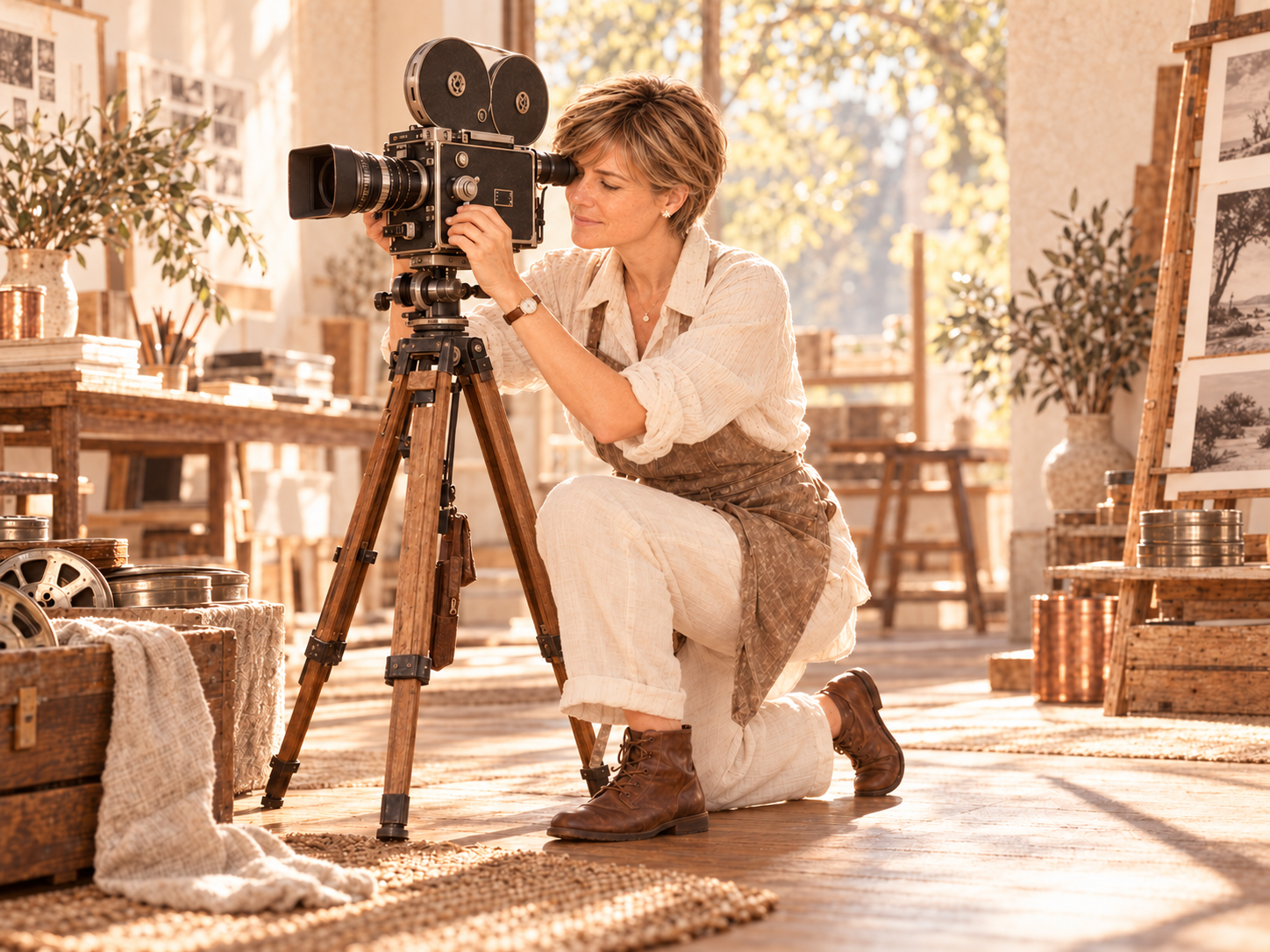
The beginning
A place to think aloud
I created this Atelier to experiment with AI and share what I discover. I have defined its purpose, visual identity and content, and I continue to review how people navigate and understand it.
My inexhaustible curiosity leads me to connect ideas and concepts, imagine and create: I like to think of myself as a weaver of ideas.
Art direction
The visual language of my Atelier
I wanted an immersive, sensory experience with a distinctive identity of its own. The Atelier is a canvas where I give space to my artistic spirit and creative instinct. I look for a personal, authentic and transparent voice that conveys trust and warmth.
Brushed brown
Elegance and warmth.
HEX #846759Textured ivory
Softness and authentic material.
HEX #E4DCCFMetallic copper
Exclusivity and a personal signature.
HEX #BB785BChocolate
Depth and contrast.
HEX #60493EA sensory reading of the palette
Colours that evoke the flavours of vanilla, cinnamon, chocolate and coffee. They suggest a warm, serene atmosphere.

An editorial voice with an artisan touch
I chose Newsreader for headings and body text, and Hanken Grotesk for navigation and details. These typefaces, textures and understated copper bring coherence to the whole.
I have also sought a way of writing that reflects my perspective: approachable and transparent, with room to share both what I learn and the questions that remain open.
An experience for the five senses
Sight: Warm colours, images and light.
Hearing: Music and rhythm that inspire me.
Touch: Ivory, leather, wood and copper,
tactile textures evoked through images.Smell: Coffee, cinnamon, wood and flowers,
scents suggested by images.Taste: Vanilla, coffee, cinnamon and chocolate,
metaphors for flavour.
Images and music are part of the visit. Textures, scents and flavours are suggested. I want an atmosphere that surrounds you, invites you to slow down and makes you want to stay.
The photographs
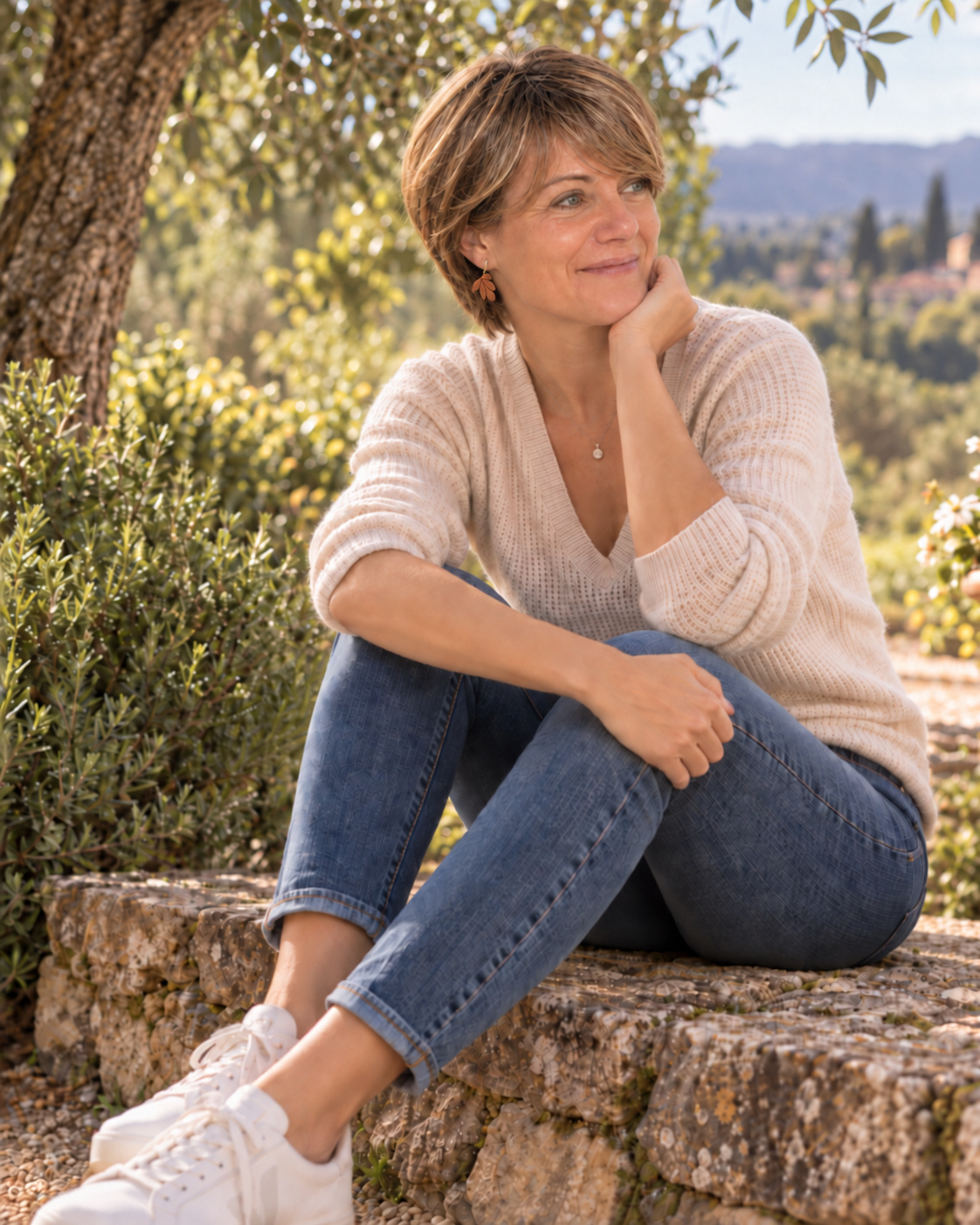
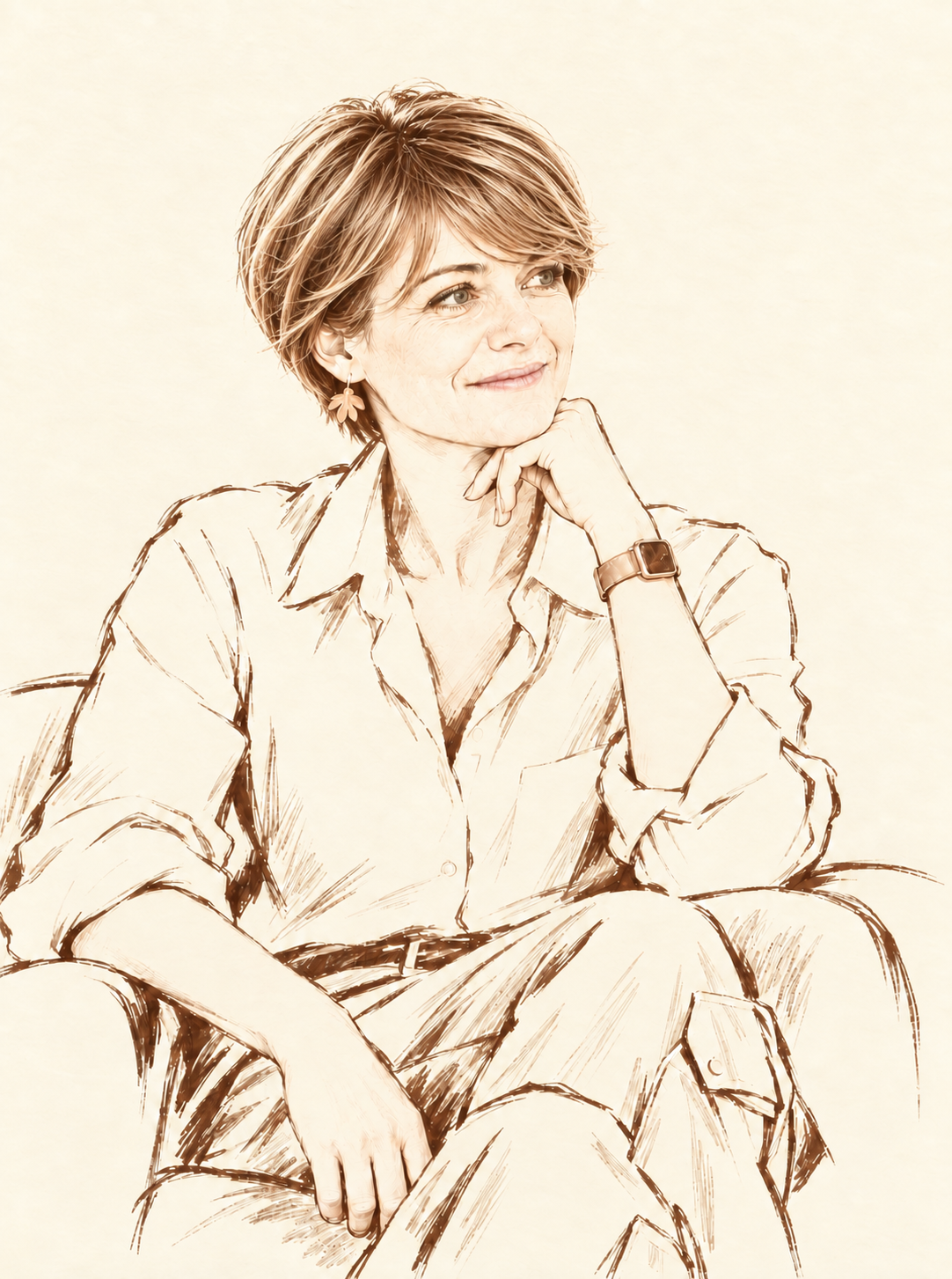
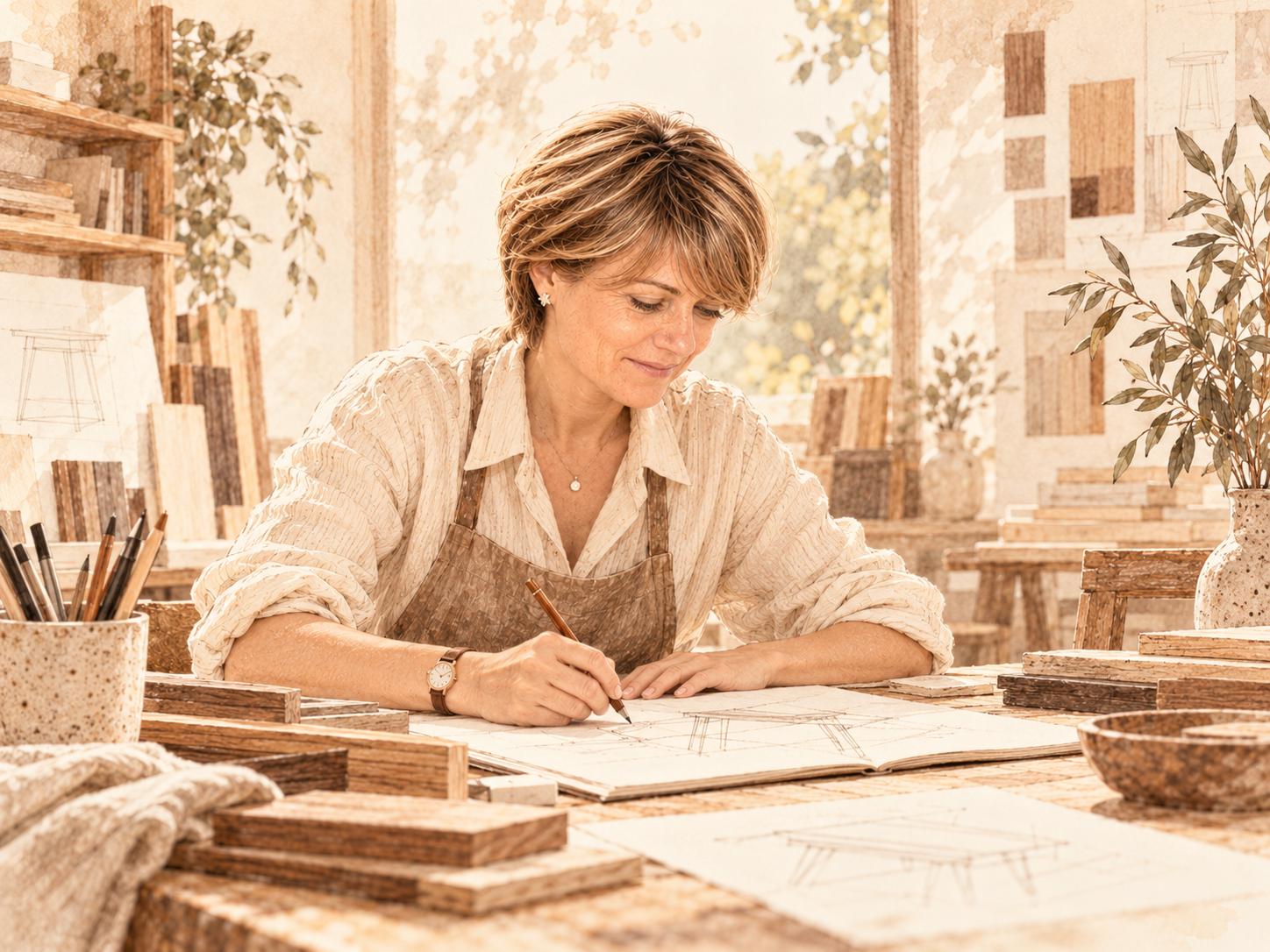
One face, different perspectives
These portraits were created with AI. The first is based on a real photograph of me. The others explore illustration and the imagined world of the Atelier.
Design and navigation
The visitor’s experience at the centre
Reading · UX / UI / CX
I review how people discover the content and find their way around the Atelier. The feedback I receive helps me spot what is difficult to find or understand.
UX · Find your way
User experience
I aim to make it clear what there is to explore and how to get there.
UI · Recognise
User interface design
I keep adjusting headings, content and links to make their hierarchy recognisable.
CX · Create continuity
Customer experience
I consider the continuity between discovering, checking, exploring further and starting a conversation.
What I check and what remains open
I check presentation, links and adaptation to different screen sizes to identify problems with functionality and reading. These technical checks are complemented by feedback from people who visit the Atelier.
A decision I revisited
- Before
The Workshop entrance had three cards. Seeing a practice meant opening another page.
- Friction / hypothesis
I noticed a possible friction: perhaps there were too many steps before visitors could discover the work.
- Decision
Show a first practice, its chart and the link to the method directly at the Workshop entrance.
- After
The current proposal brings that first practice and its evidence together at the entrance, with options to keep exploring.
This is a design decision based on a hypothesis. Its effect on the user experience still needs to be validated with the people who use the Atelier.
The method
How I work with AI
I begin with clear goals, context and instructions. How I review each proposal depends on its content and intended use.
I also work with Qwen through Open WebUI on my own computer, with hardware set up to run it. With this environment, I aim to have more control over information and reduce its exposure to external services.
Working locally also requires checking where software comes from, keeping it up to date, protecting access and limiting the permissions of connected tools. The aim is to reduce risks while keeping the limitations of this environment in mind.
I combine this environment with ChatGPT and, occasionally, Claude, taking care over the information I share with each tool.
My contribution, checks and limits
My contribution
- Direction and strategy. I decide what to share, with whom and how to connect content, identity and experience.
- Chronicles. I connect data and emotions. AI helps me structure ideas and find sources.
What I check
- Sources. I cross-check sources and distinguish facts, interpretations and synthetic material.
- Language. I review inclusion, how people are represented and readability.
Judgement and limits
- Editorial responsibility. I consider what to delegate, what to publish and how to manage data, access and privacy.
Lessons learned
What I take from the process
- AI speeds up execution.Deciding what to ask for and what to keep still takes time and judgement.
- Coherence also means leaving things out.Not every interesting idea needs a place in the Atelier.
- Publishing also calls for review.Alongside design, privacy, data, rights to materials, accessibility and transparency about AI need review.
I have reviewed the Atelier with another AI to identify possible issues with usability, privacy or transparency. This is an additional check.
What you don’t see
Decisions, trials and steps back
The initial idea changed as I built the Atelier. I explored different directions, set aside images and proposals that did not fit, and revisited decisions I thought were settled.
One difficulty has been keeping settings, characters, materials and style consistent across tools and results.
My perfectionism has also led me back to small adjustments. I am learning to distinguish between caring for the project and endlessly refining it, and to share a version that is good enough to keep improving.
Authorship
My role within the Atelier
«Happiness is not a station you arrive at,
but a manner of traveling».
Source consulted ↗