 Virtual café
On 13 October 2026, I read a survey about how adults in the United States imagine the future of work with AI. Of those surveyed, 65% agreed that if AI makes work less meaningful, people will lose their sense of purpose and dignity.[1]
The survey, conducted with 1,158 people in August 2026, records expectations. It does not establish what will happen or necessarily describe how people in Europe feel.[3] Even so, it got me thinking about what is at stake when we talk about automation.
Work provides a living and can be part of how we see ourselves and feel we contribute. In that survey, 70% of people in employment said it was very or extremely important to their sense of meaning and purpose.[2] That does not mean everyone experiences it in the same way. For some, it can be a burden, and a meaningful life can also be built outside paid work.
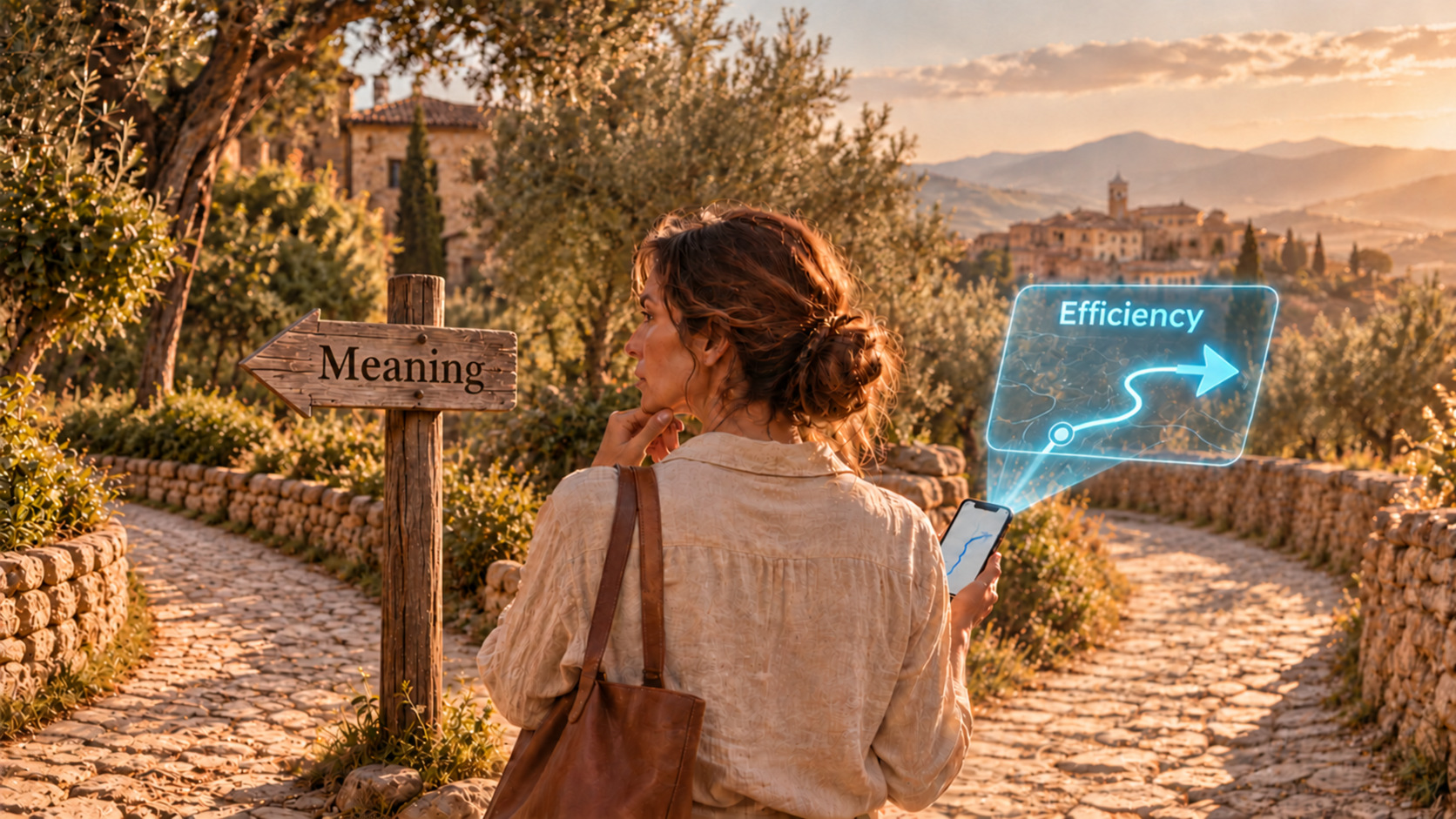
That is why saving time seems an incomplete promise unless we discuss what happens next. Removing a task can lift a tiring obligation. It can also take away an opportunity to learn or a part of the job someone found satisfying. It matters to look at what changes in that person’s experience.
I think, for example, of a tool that prepares a report. It could save hours of gathering information and leave room to explore a question more thoroughly. But if the time saved immediately becomes more reports to produce, the change would be different. That possibility deserves discussion before we assume that producing more means working better.
There is also the question of autonomy. Being able to use a tool, examine its suggestions and decide when to set it aside is different from simply approving a ready-made answer. If that review becomes a formality, what room remains to learn from decisions and take responsibility for them?
I do not think keeping tasks out of habit resolves this concern. I do think the people doing them should have a say in changing them. Their experience can help identify what is exhausting and what deserves to be kept. That conversation should happen before adapting to an already decided way of working becomes the only option.
The survey does not tell us how to organise that future. To me, it leaves a question worth asking with every change: when a task passes to AI, what ability to decide will the person who did it gain or lose?